The economic impact
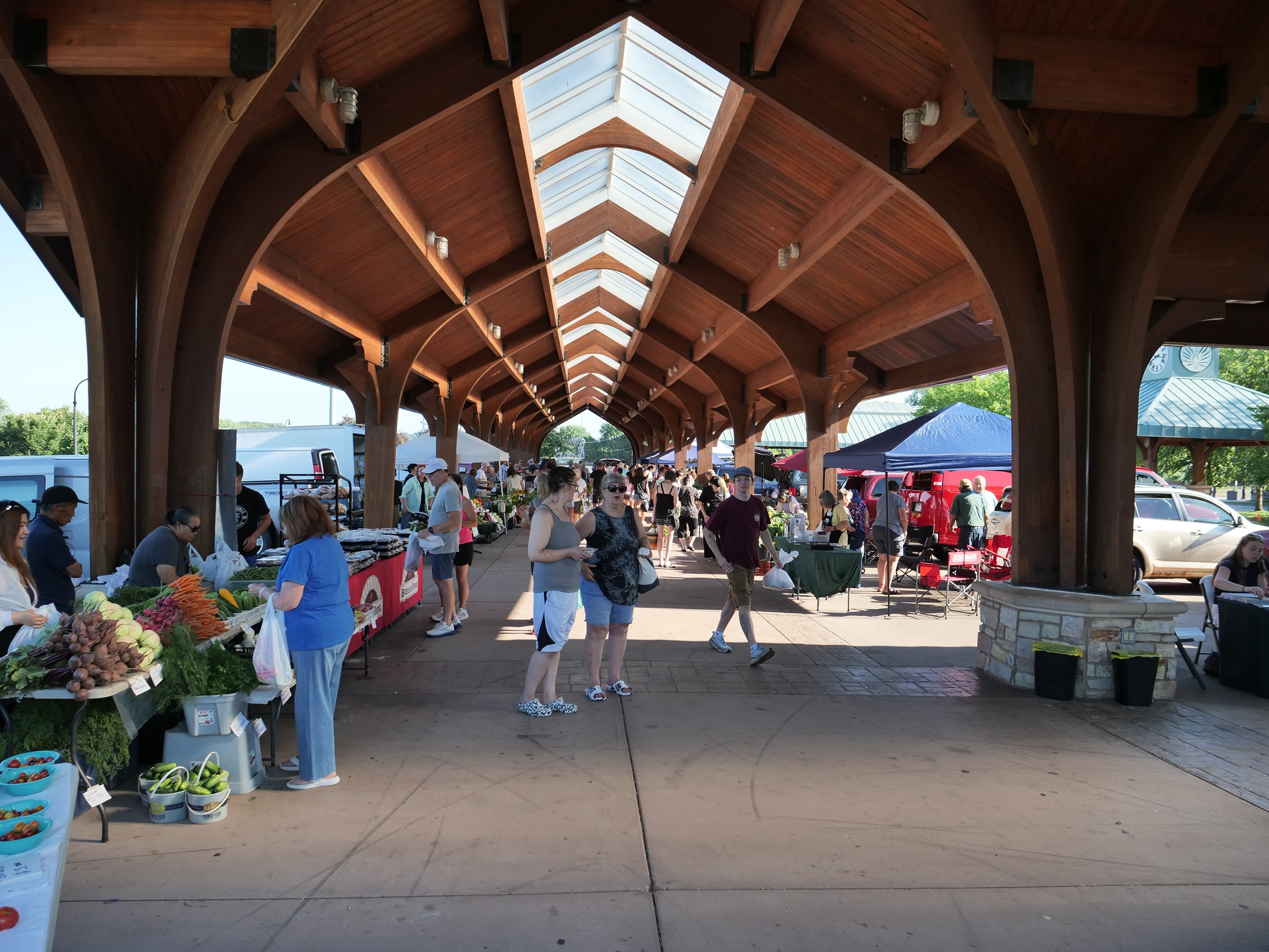
While the primary emphasis of the Wisconsin Double Up Food Bucks program is to help provide additional healthy food choices for those dealing with food insecurity, it has a ripple effect on the overall economy in a community, according to Rockler.
“The money spent by individuals to purchase those fresh fruits and vegetables is going to support our local farmers,” Rockler says. “That means a lot for the person who’s receiving that money for the work and the labor they put into producing that food. It’s going to keep our regional food economy strong.”
Rockler says the economic impact is one of the big takeaways for students conducting the research.
“For our students to see the impact this has on vulnerable communities is really important, and I think it changes the trajectory of their education for a lot of them.”
For students like Bovet, the overall impact of the program that has been revealed by their research is impressive.
“It’s been very rewarding to be able to see the boost to the economy,” Bovet says. “We found in our last research paper that the Market Match program and SNAP basically generated over $45,000 dollars of economic activity, which is great for the local economy.”
Bovet, who plans to attend medical college after graduation, realizes the research she’s taking part in this summer could have long-term impact on the patients she could see in the future.
“Food insecurity and having access to healthy food is something that will affect my patients,” Bovet says. “Because what can tie into a lot of illnesses is not having the right nutrition or access to good food. So, this research helps boost economic activity and also keeps people healthier.”
Presenting their findings
Rockler says students get more experience than just the study of the analytics involved in the research. They also get to present those findings. Rockler says in the past year students have presented their findings at UW-Eau Claire’s Celebration of Excellence in Research and Creative Activity, along with presentations at the National Conference on Undergraduate Research in Richmond, Virginia, and the Agriculture, Food, and Human Values Society Annual Conference at the University of Vermont.
The students presenting at those conferences come from a variety of different majors, which they say adds value to their research findings.
“We have a lot of different majors in our research group,” Bovet says. “It’s been really nice to talk with people with different backgrounds and different points of view of public health and I think it just makes collaborating that much better.”
“It’s very beneficial to get lots of different perspectives from people with different backgrounds,” Grahn adds.
A sense of community
Because this research is based not just on data analytics, but on face-to-face meetings with the people affected by the Double Up Food Bucks program, Rockler says students have a stronger sense of community through the people they meet.
“I think they feel better about benefiting the community in some way, rather than just doing lab research,” Rockler says. “You see the direct benefits. You’re working directly with the beneficiaries. And I think that’s great for the students.”
For the students, the research has provided more than an advanced knowledge of how to conduct data analysis. It gives them a closer look at the community they live in.
“I didn’t realize that being in a research group could have such an effect on the people around me in the community,” Bovet says.
Rockler says for those dealing with food insecurity, the program, and the research that is a part of it, can provide a sense of security.
“It’s going to benefit households that may have issues accessing fresh fruits and vegetables,” Rockler says. “It’s a win-win. There’s no downside to giving people fresh fruits and vegetables that are grown locally.”