ID
Story Categories
Authored on
UW-Eau Claire bat biologist expands research, insight into often misunderstood mammal
Published on:
Intro text

Like ghouls and ghosts, bats have been associated with Halloween for as long as we can remember. They are seemingly everywhere this time of year, depicted in decorations, spooky stories and haunted houses.

Popular culture can portray bats as harmful and frightening. The reality is bats are often misunderstood mammals, serving a crucial role in our ecosystem through their nocturnal activities.

Dr. Robert Arndt, associate lecturer of biology and the first bat biologist at the University of Wisconsin-Eau Claire, is providing larger insight into how dynamic these tiny animals are through opportunities on campus and around the globe.

Sections

This semester, Arndt received research lab space in Phillips Hall and is leading a project to record bat acoustics and migration patterns along the Chippewa and Mississippi rivers. He is also guiding a student through the first literature review paper of winter bat activity in North America in decades.

Last month, Arndt was selected to be an editorial board member and associate editor of Acta Chiropterologica, a peer-reviewed, scientific journal published by the Museum and Institute of Zoology at the Polish Academy of Sciences, which is devoted to the study and discussion of bats.

“I’m pretty excited,” Arndt says of the position he will begin in January. “It’s a great way for me to increase my contribution to the research community by donating my time to make sure that good research is published."

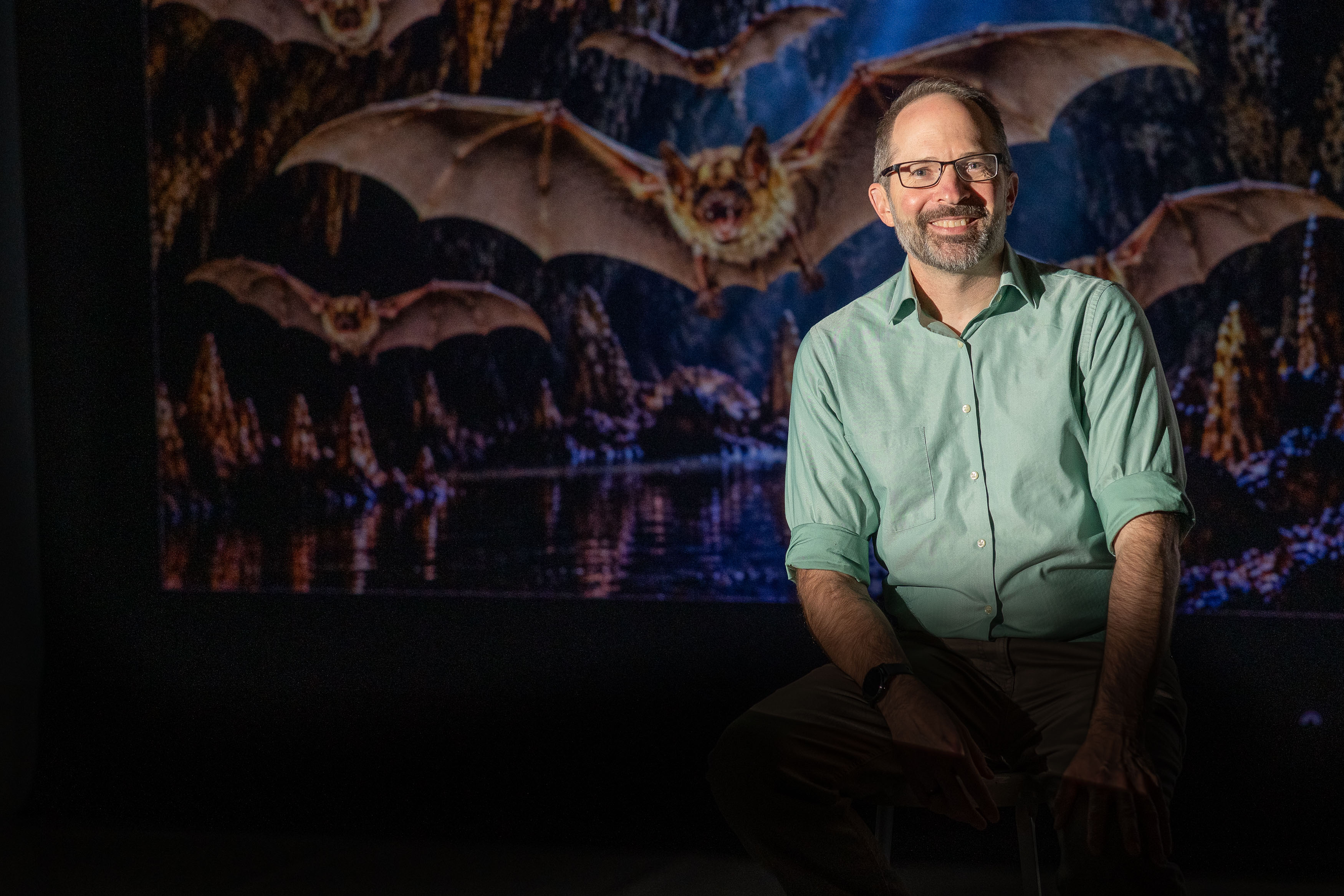
Robert Arndt headshot
Dr. Robert Arndt, associate lecturer and bat biologist

“We’re thrilled for this new opportunity for Dr. Arndt and excited to see him continue his research in bats!” says Dr. Derek Gingerich, professor and chair of the biology department. "His significant research expertise and experience makes him a great selection for the role."

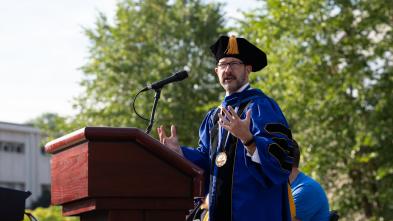
Professional portrait of Derek Gingerich
Dr. Derek Gingerich, professor and chair of the biology department

Dynamic, undervalued creatures

Arndt discovered his interest in bats in the abandoned iron mines of Iron Mountain, Michigan, in the late 2000s as an undergraduate student at Eastern Michigan University. Through research with a mentor, he learned how dynamic but undervalued bats are. He continued his studies in Tennessee and eventually earned a doctorate in ecology at Indiana State University in 2018.

Arndt was a professor in Missouri in 2022 when he decided to move to Eau Claire to be closer to his partner. A timely department opening at UW-Eau Claire allowed him to begin teaching anatomy and physiology, and he has since expanded his offerings to include biological inquiry, upper-level courses in ecology and environmental biology and an honors course on fermentation biology.

“Given the breadth of courses he teaches, he not only has a strong impact on our biology majors but also students in a wide variety of other areas, including nursing, exercise science, rehabilitation science and biomedical engineering,” Gingerich says.

As the first bat biologist on campus, Arndt sees an opportunity to incorporate lessons on the animals into classes or international research projects UW-Eau Claire students pursue in Ecuador and the Bahamas. With more than 1,500 species of bats worldwide, the possibilities for engagement are endless.

“I could teach an entire class on winter bat physiology. We could learn so much from their immune systems and ways to help with vaccines for humans,” Arndt says. “There’s really interesting questions that could be asked.”

Dr Robert Arndt and his bat audio recording equipment
Arndt poses with some of the equipment he uses to detect bat acoustics.

Liam Lamb, a fourth-year biology, ecology and environmental biology major, says there is an interest on campus for more specified research, including bats.

“Specific research on any animal would be great, just because that gives the students more knowledge on what it means to specify on something,” the Minneapolis native says.

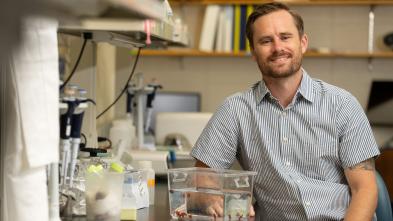
Liam Lamb headshot
Liam Lamb is leading a literature review project about the winter activity of bats in North America.

Why bats are a treat, not a trick during Halloween

Bats are linked to Halloween through ancient harvest traditions, modern marketing tactics and literary vampire myths. Thousands of years ago, Celts inhabited much of Europe and celebrated Samhain, an end-of-year harvest festival, with large bonfires that attracted moths and insects, and subsequently, bats.

The 1897 Gothic horror novel “Dracula” by Irish author Bram Stoker utilized sanguivorous vampire bats from Central America to create the book’s main character. The plot became the basis for an entire genre of literature and film.

“Just like what ‘Jaws’ did to sharks,” Arndt says. “Everyone has this negative idea of bats and all these different myths about what bats do.” 

Instead of drinking your blood or intentionally flying into your hair, Arndt says bats benefit the ecosystem by naturally controlling insect populations. By removing moths and worms from corn stalks and tomato plants, bats save farmers millions of dollars in pesticides. Bats can consume hundreds of mosquitoes per hour and some pollinate flowers and disperse seeds.

Arndt conveys those essential contributions as he educates students and the greater community about bats and ultimately tries to change the narrative for the misunderstood mammals.

“They may not be very cute and cuddly,” Arndt says, “but it doesn't mean they don't deserve to be around.”

For the media
For the media
Image download