
ID

UW-Eau Claire professor wins national award for undergraduate research with helping hand from amazing students
Story Categories
Authored on
UW-Eau Claire professor wins national award for undergraduate research with helping hand from amazing students
Published on:
Intro text
Four years ago, Dr. Nic Wheeler arrived at the University of Wisconsin-Eau Claire feeling both excited and uncertain about his first teaching role. The assistant professor of biology knew he had found a university where he could provide the same level of mentorship that had a profound impact on his undergraduate education and helped him discover his dream career. However, Wheeler didn’t know if he would be able to conduct cutting-edge research — his other passion — at a predominately undergraduate institution.
Sections

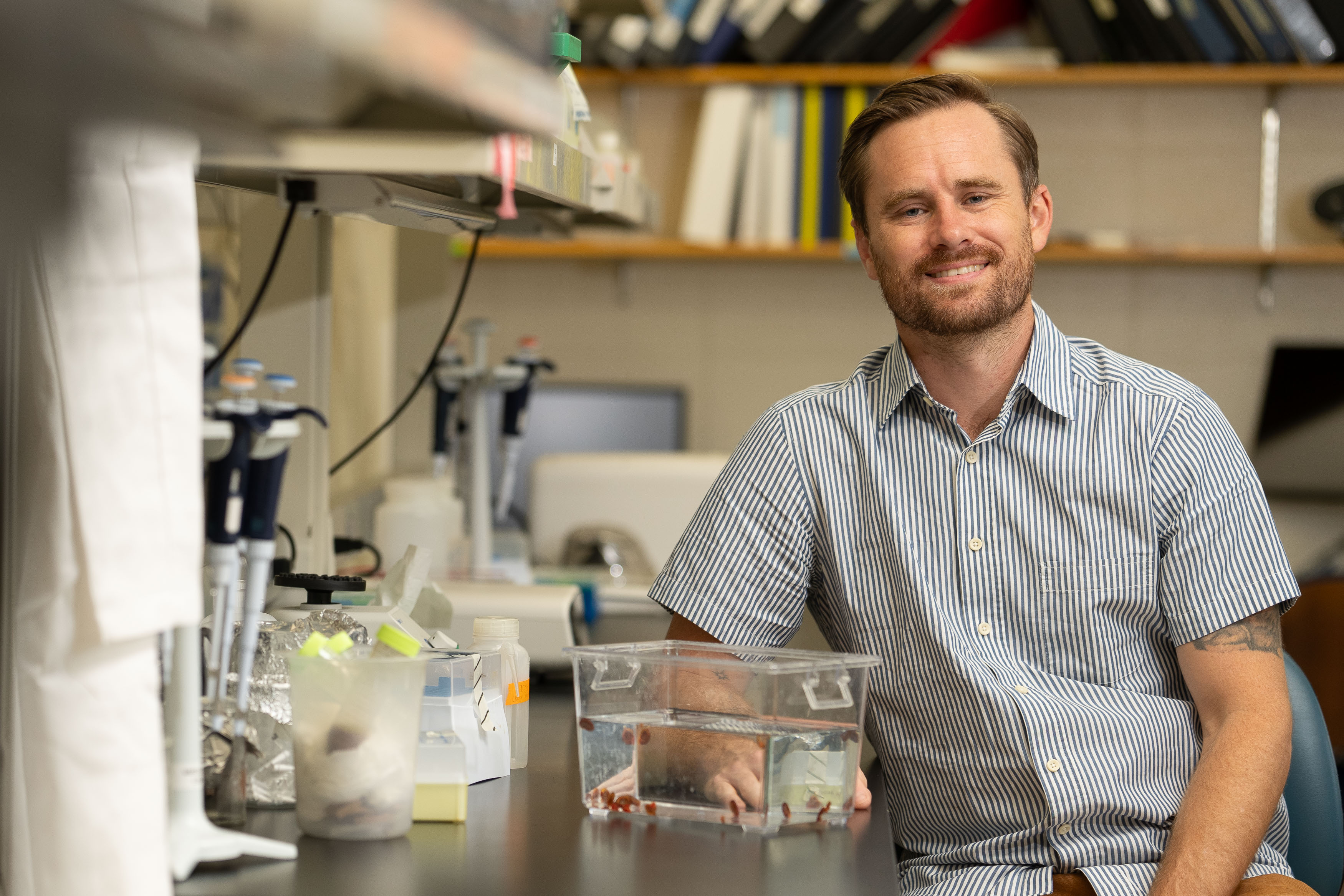
Dr. Nic Wheeler stands behind a container of freshwater snails, the initial hosts of schistosomes that play a key role in his research with students.

From left, Dr. Nic Wheeler and UW-Eau Claire students Declan Algrem, Bailey Stuart, Sky Consiglio, Sonja Olson and Theodore Schwantes enjoy the views of the Wisconsin state Capitol and downtown Madison while attending the Midwest Neglected Infectious Diseases Meeting.
For the media
For the media
Image download
You may also like
As students return to UW-Eau Claire for the 2026-27 academic year, Dr. Ed Martini is also entering his first semester as chancellor. We caught up with Chancellor Martini to learn more about his background and what he’s looking forward to as the fall semester begins.
Dr. Benjamin Fine and Dr. Juan Zhang are part of the 23-member class of faculty and instructors who will participate in a yearlong program starting in May.
The longtime professor of chemistry and biochemistry is the 2026 Council on Undergraduate Research Chemistry Division’s Outstanding Mentorship Award winner.