ID
Authored on
Graduates of UW-Eau Claire earn life-changing degrees at Stanley Correctional Institution
Published on:
Intro text

Commencement season is being celebrated across the Universities of Wisconsin throughout May, and May 20 will mark a special milestone in public higher education in the state.

Today, eight graduates of the University of Wisconsin-Eau Claire will accept their bachelor’s degrees in professional studies — graduates who have earned their degrees through in-person classes while incarcerated at the Stanley Correctional Institution.

Sections
While various iterations of prison-based higher education programs have been offered through Wisconsin colleges and universities for over a century, the vast majority of those have been associate or certificate programs.

The eight UW-Eau Claire graduates, alongside students graduating from UW-Stout at SCI the same day, will be among the first incarcerated people to receive bachelor’s degrees from a UW institution in 51 years.

In 1975, three incarcerated individuals earned bachelor’s degrees from UW-Green Bay through two years of in-facility coursework and a subsequent study-release program.

Evidence-based program launch

In fall 2024, UW-Eau Claire launched a pilot program at SCI as part of the University of Wisconsin Coalition for Higher Education in Prison (UW–CHEP). Just one year later, the Higher Learning Commission officially approved SCI as a UW-Eau Claire instructional site, marking an important step in expanding access to higher education across Wisconsin.

Participating campuses in UW-CHEP are UW-Eau Claire, UW-Green Bay, UW-Madison, UW-Milwaukee and UW-Stout. All programming is supported by the Prison Education Initiative (PEI) out of UW-Madison's Division of Continuing Studies.

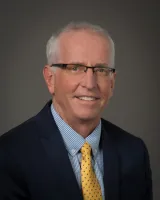
Dr. Mike Carney headshot
Interim Chancellor Michael J. Carney

Dr. Michael J. Carney, UW-Eau Claire’s interim chancellor, expresses deep pride in all the participants and outcomes of the SCI education program.

“Expanding educational pathways for students is an important goal in UW-Eau Claire’s strategic plan, and I am exceptionally proud of the students who have worked so hard this year to shape their futures,” Carney says. “I am inspired by the commitment of our faculty and staff who have worked tirelessly with our Universities of Wisconsin colleagues to develop and deliver this program. This initiative is improving communities and changing lives by helping meet educational needs across the state of Wisconsin.”

According to the state’s Department of Corrections (DOC), nearly 40% of all individuals being released from prison in Wisconsin will return to prison within three years. A national study by RAND, begun in 2007, found that inmates who participate in correctional education programs had a “43% lower chance of recidivating than those who did not.” RAND further found that “every dollar invested in prison-based education saves up to $5 in re-incarceration costs.”

These data were compelling for UW-CHEP program organizers, along with the core belief in the expansion of education access as a public good.

Headshot of Dr. Louisa Rice
Dr. Louisa Rice, associate vice chancellor for academic affairs and director of the Prison Education Program at UW-Eau Claire
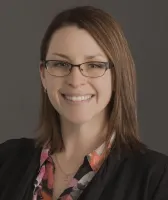
Dr. Louisa Rice, associate vice chancellor for academic affairs and director of the Prison Education Program at UW-Eau Claire, is proud of everyone associated with this education outreach initiative.

“UW-Eau Claire’s participation in the UW-CHEP reflects our belief that education is a human right and a vital investment in our communities, and we are proud to be part of resuming efforts to offer bachelor’s degrees to this population,” Rice says.

“Our team has worked tirelessly to replicate the campus learning experience within Stanley Correctional Institution. I’m so proud of these efforts as well as our continued dedication to the intellectual and personal growth of all people — a hallmark of the Wisconsin Idea.”

Transformative impact for students and faculty alike

Some of the long-term outcomes of earning this degree won’t be felt for a while by the graduates, but the reflections they have shared anonymously go a long way in demonstrating the immediate impacts.

Students shared the following thoughts with Nichole Miller, post-traditional program manager in the College of Health and Human Sciences, which houses the professional studies program: 

“I never thought I would have the opportunity to earn a bachelor's degree through a UW school while I was incarcerated. This has been a very empowering experience for me. Throughout this journey my confidence has grown, my belief in myself has grown and my sense of self-worth has grown.” ~SCI student

“This journey hasn't always been easy, but I can say that this experience has been one of the most meaningful and transformative of my life. Thank you, PEI (Prison Education Initiative), thank you UW-Eau Claire and UW-Stout, and yes, thank you, SCI and the Wisconsin DOC. I hope that the achievements of these participants emphasize the value and overwhelming need of positive, rehabilitating opportunities, as well as the innate and potential value of the human beings that are in your care. Be well and brightly blessed.” ~SCI student

“Earning this degree has been transformative. It represents the beginning of my reintegration into society and has significantly boosted my self-confidence. Furthermore, my achievement has inspired my daughter to return to education, and it has shown my grandson that setbacks do not define a person's worth or potential.” ~SCI student

“The quest for my degree has been more than a path; it's been a fiery rebirth. This journey has awakened a soul long lost, gifting me an unshakeable sense of belonging where I am finally seen and heard. With every lesson, I've not only reclaimed my voice, echoing with newfound confidence, but also I uncovered a resilient spirit I never knew existed. This experience has directed me into someone stronger, braver and undeniably, myself. I am forever grateful for this transformative power.” ~SCI student

For Miller, advising this cohort of students has been a career highlight.

Nichole Miller
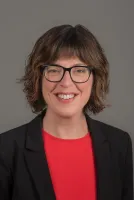
Nichole MIller, post-traditional program manager in the College of Health and Human Sciences
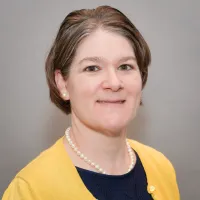
“Being part of this program has been one of the most rewarding experiences of my career,” Miller says. “The students bring a level of focus and determination that’s evident the moment you walk into the classroom. One student shared, ‘When we’re here in class, I don’t feel like I’m in prison,’ a powerful reminder of how meaningful this opportunity is.”

If there is one other key indicator of the personal impact this program is having for UW-Eau Claire faculty, it would be the fact that nearly all faculty who taught any number of courses at SCI have elected to attend the commencement ceremony — attendance doubling the number of graduates.

Headshot of Associate Professor Jamie Tester Morfoot
Jamie Tester Morfoot, associate professor of social work
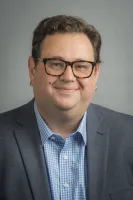
Jamie Tester Morfoot, associate professor of social work, taught two classes for this cohort of graduates — one in their first semester and the capstone course she just completed with the group. She says she “wouldn’t have missed the graduation for anything.”

Tester Morfoot explains that faculty and administration began meeting with potential students of the program a year prior to launch, looking for their input on how a program would best work for them, and understanding their hopes for the experience.

“The idea they emphasized the most was that they were so grateful for the opportunity and simply hoped not to be treated differently than other students,” Tester Morfoot says.

In the capstone course, a culmination of learning outcomes as with all other degree plans, Tester Morfoot says several graduates highlighted the ways that the program opened their minds to topics and ideas and ways of thinking that they said “would never have become part” of their experience otherwise.

“That’s the dream for all of us as faculty for any college students — that this education provides them an opportunity to think critically about social issues, to tap into their lived experiences and walk away with the ability to go forward in life seeing those and other issues through multiple lenses. That’s a dream-come-true outcome.”

Dr. Aleks Sternfeld-Dunn, Dean, College of Arts and Sciences
Dr. Aleks Sternfeld-Dunn, dean of the College of Arts and Sciences

For Dr. Aleks Sternfeld-Dunn, dean of the College of Arts and Sciences, teaching in the PEI program has been “rewarding beyond measure.”

“I can tell you that our students there are grateful for the chance to learn, to be challenged and to grow in meaningful ways. Teaching at Stanley and playing a small role in helping these individuals attain a college degree is the most impactful thing I’ve done in my time as an educator," Sternfeld-Dunn says.

For the media
For the media
Image download