ID
Authored on
UW-Eau Claire psychology students collaborate with Eau Claire Sober Living to aid recovery from addiction
Published on:
Intro text

A new collaboration between the University of Wisconsin-Eau Claire and Eau Claire Sober Living is allowing students to actively participate in and learn directly from people in the addiction recovery process.

Dr. Doug Matthews, professor of psychology, teaches the course PSYC 363: Psychology of Addictions, which investigates the neurobiological causes of addictive personality types and chemical and behavioral addictions, as well as treatment options and outcomes for those walking the pathway out of addictions. This semester, his students are witnessing the challenges and triumphs of recovery from alcohol and other substance abuse through Eau Claire Sober Living, a live-in community that provides a safe and supportive environment for recovery.

Sections

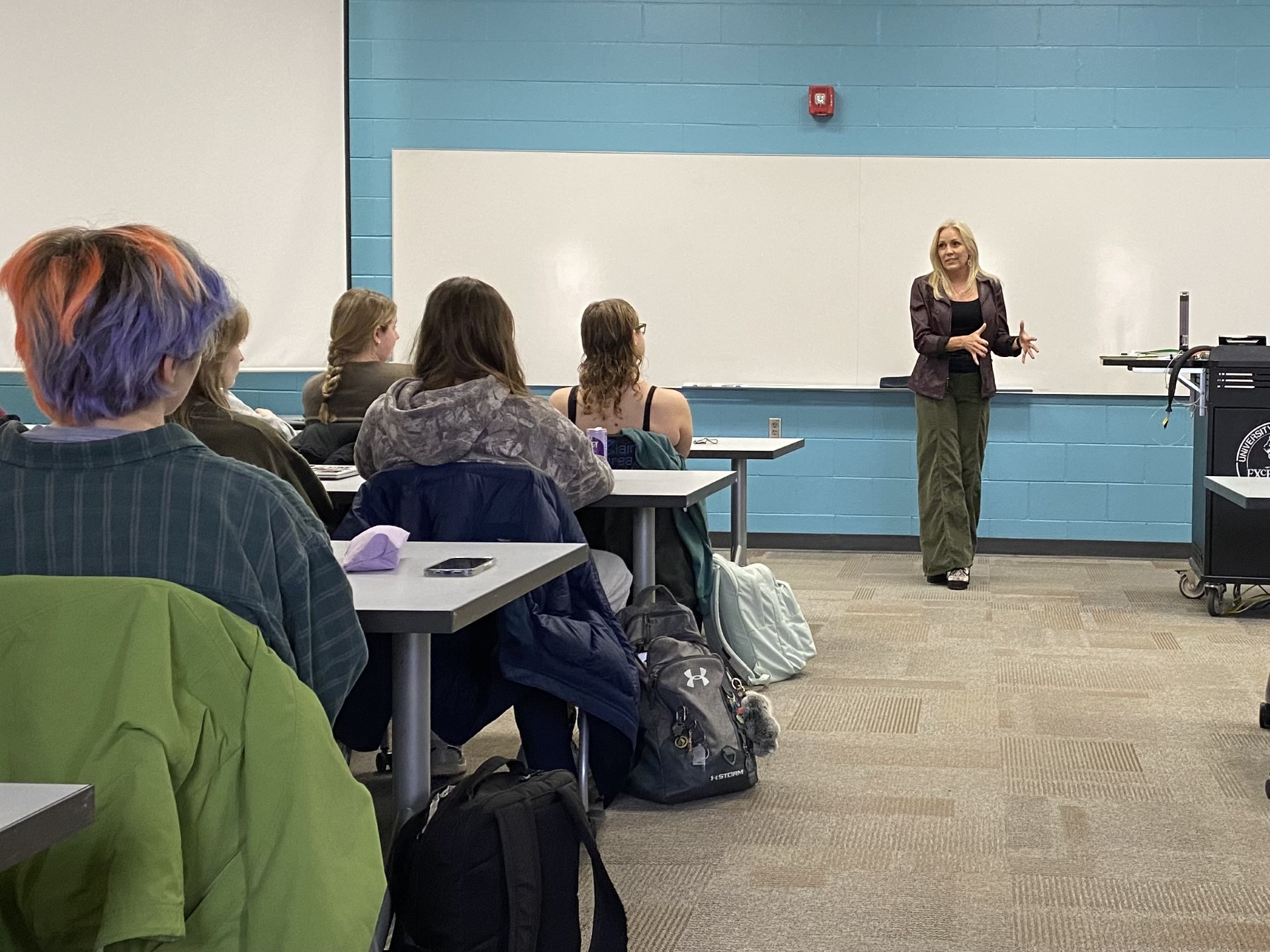
Michelle Markquart, a UW-Eau Claire alum who started ECSL in 2020, recently shared a vulnerable and transparent account of her life story with the class. She detailed her timeline of alcohol addiction, the psychological and behavioral changes she faced, the trauma it created in relationships and why a sober home was the most helpful resource in her recovery. She will celebrate 10 years in recovery in May.

“It was nice to hear someone who has recovered from it talk about it rather than someone who’s stuck in the middle of it,” says Gabriella Rendon, a senior studying neuroscience.

“What resonated with me is when she talked about the trauma part,” says Dianara Ubisse, a senior psychology student, adding, “I really relate to that."

Blugold psychology students work with Eau Claire Sober Living to better understand addictions

Matthews says it was powerful to see a real-world example of the information students are learning through lectures and papers.

“We’ve never had somebody come into the university, come into the classroom and provide additional educational experiences,” Matthews says. “It’s new for me and something I’m incredibly excited about.”

Picture of Matthews
Dr. Doug Matthews, professor of psychology

Markquart is providing valuable experiences outside the classroom as well through student interviews with her residents. The conversations have been raw, revealing and helpful in the healing process, she says.

“My gentleman was able to talk about things that he has not shared before,” Markquart says. “This is something he’s been carrying for 45 years of shame and just kept locked down, which is what keeps us sick.”

Markquart says more residents are open to sharing their stories after learning how impactful the initial conversations were.

Senior Ashtyn Meyer, a psychology major, says an interview she conducted opened her eyes to the stigma associated with addiction.

“Hearing them and seeing them move forward is really inspirational and takes a lot of courage,” she says. “Being able to hear everyone’s stories is really great.”

Every student is required to interview a person battling addiction or working through recovery, which Matthews calls the best assignment he has ever created. Ubisse lost an uncle to addiction, but believes she now has more avenues to encourage other family members to continue their battles.

Matthews and Markquart say the collaboration will continue to evolve this semester and beyond. One idea is to create small group discussions where one or two residents meet with a small group of students for more intimate conversations. Another is for a larger number of students to gather for a meal with residents.

“I believe our residents carry a great deal of wisdom that can positively impact these students,” Markquart says. “The perspectives they share may offer insight, encouragement or even tools that students can draw on in their own lives or pass along to someone they care about. Simply exposing them to different healing modalities and how to be supportive is powerful.”

For the media
For the media
Image download