ID
Story Categories
Authored on
True Blu: Next-gen workforce advocate Omid Razmpour
Published on:
Intro text

Omid Razmpour, a 2020 University of Wisconsin-Eau Claire nursing graduate, did not set out to become an entrepreneur.

Nor did he set out to build an analytics framework and technology platform designed to overhaul the nursing management system in one of the nation’s major healthcare and health education systems — Emory Healthcare in Atlanta, Georgia.

But that is, indeed, what Razmpour is doing.

Sections

Razmpour recently completed his Ph.D. at Laney Graduate School and the Nell Hodgson Woodruff School of Nursing and a concurrent MBA from Goizueta Business School at Emory University.

Razmpour, who dedicated his Ph.D. research and dissertation to improving workforce conditions for fellow nurses everywhere, was awarded in May with the highest honor presented to students at Emory, the Marion Luther Brittain Award for “significant, meritorious, and devoted service to both the university and the greater community.”

That service to the field of nursing and the Emory Healthcare community is likely just the start of the impact that Razmpour will have on healthcare systems.

Razmpour at Emory commencement
At the May 2026 commencement, Razmpour was presented with Emory University's highest honor for students, graduate or undergraduate. The Marion Luther Brittain Award was a recognition of Razmpour's advocacy for the nursing workforce at Emory Healthcare.

A change of plans and purpose

“After my incredible undergraduate experience at UW-Eau Claire, I started my first job in 2020 as an ICU nurse full of optimism and confidence,” Razmpour recalls. “I was starting my dream job that was very exciting and the ICU was where I wanted to land as an R.N.”

That brimming optimism, Razmpour says, was short-lived as the COVID-19 pandemic turned his ICU dream into a literal nightmare.

“As we know, it was like this everywhere at that time, but my job caring for the sickest of the patients became nothing but hopelessness and despair,” Razmpour recalls. “We knew where most of these patients were headed and the personal toll was devastating for a brand-new R.N. in the field. Or for anyone, honestly.”

Hearing the voices of his undergraduate mentors at UW-Eau Claire, Razmpour did what he’d been taught to do — ask for help. What he discovered, sadly, was that help wasn’t available to him when he needed it most.

“A first appointment for mental health services was a monthslong wait,” he says. “Management could not keep up with any of the needs of the nursing staff in those conditions, and I made a life-changing decision to leave my job after less than a year. It was the last thing I wanted to do, but for my own health and well-being, I had no other choice.”

Encouraged by his family, Razmpour stepped away from bedside nursing and took time to heal and rethink his healthcare path. He began a journey of education, research and repair that now finds him leading a team of innovators using existing hospital human resources, as well as clinical and financial data to solve the widespread retention problems in the field of nursing.

Journey to award-winning workforce advocacy

His drive to improve working conditions for nurses became the foundation of Razmpour’s Ph.D. dissertation. Working with Emory Healthcare's own financial and human resource data, he built the Retention, Evaluation and Turnover Analysis for the Investment in Nursing (RETAIN) Framework, the first analytics model of its kind to quantify the true financial impact of each nurse who chooses to leave the job.

Along with three engineers, he then partnered with Emory Healthcare to turn that research into the Nursing Workforce Analytics platform, a tool that shifts nursing workforce management from reactive crisis response to proactive, data-driven decision-making. The NWA venture is being further developed for scale in the 2026 Atlanta-based, mission-driven startup WorkforceIQ.

“I know how badly I struggled, and I kept hearing the stories of all the other nurses who have struggled in similar ways — why wouldn’t I take my ambitions for helping others in a new direction and find new ways of supporting the nursing workforce,” he says.

Dr. Jeannie Cimiotti, professor of nursing at Emory University, was Razmpour’s Ph.D. advisor, and she recalls a determined and focused candidate, the likes of which she says she “won’t ever get the chance to mentor again.”

Omid Razmpour and Emory mentor Dr. Jeannie Cimiotti
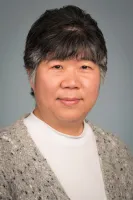
Emory University's Dr. Jeannie Cimiotti, professor of nursing, served as a Ph.D. mentor for Razmpour, the first student at Emory to pursue a Ph.D. and MBA simultaneously.
“When Omid first shared his pandemic ICU nursing experiences with me, what stuck with me was not the pain of his story — it was his resolve,” Cimiotti says.

“He was not looking for sympathy, as he had already decided to fix the system that had failed him.”

Razmpour says he understood that the COVID-19 pandemic was an extreme circumstance, but the underlying systemic struggles for nurses have existed for decades, and he was hungry to find solutions.

“Workforce issues, like the ones I experienced, have been present, like something hiding in a dark room for a long time in our profession — COVID-19 just flipped on the flashlight to make it visible. The light eventually turned off, but the issues remain,” he says.

He says he set out to become an expert in these workforce issues, recognizing that they affect hospitals in myriad ways, most of all financially.

Cimiotti says her young mentee saw the big picture clearly and quickly decided how best to argue for resource allocation change.

“Omid understood that better working conditions for nurses would only happen at scale if he could speak the financial language of hospital leadership, so he learned it,” Cimiotti says.

“My research focuses on healthcare as a business, one driven by financial incentives, so we must build the financial case for investment in the nursing workforce,” says Razmpour, who uses a “cost accounting and labor economics lens” to demonstrate better resource allocation to hospital administrators.

Immediate return on investment for Emory Healthcare

“The RETAIN framework shows the true cost of not investing in the support of nurses,” he says. “We discovered that at Emory Healthcare, every time a nurse quits their job, it costs the system over $85,000 in training and refilling a position. That’s a lot of money.”

Razmpour’s research also exposed the management load of a typical nurse manager, a person who oversees an average staff of 50-70 nurses.

“Nurses account for the largest pool of employees in any hospital. With those kinds of numbers, there is no way for one nurse manager to truly understand the individual needs of each nurse on their staff, so there is no real understanding of what support resources are most needed,” he explains, adding that consistent communication and simple recognition from a manager can be all that it takes to keep a nurse on the job.

In response to Razmpour’s and the team’s dissemination of this data to executives in 2023, Emory Healthcare invested $150 million in systemwide compensation.

“That’s my biggest career accomplishment thus far,” Razmpour says. “That investment by Emory resulted in a 15% salary increase for nurses across the system, among other resources. To have that extra $9,000 each year can make all the difference for nurses when it comes to annual insurance costs, childcare or transportation.”

Razmpour says that since adopting the pilot of the RETAIN framework, the Emory Healthcare system has seen a 58% drop in turnover of nurses, which he calls “the whole point of our work.”

Dr. Sharon Pappas, chief nurse executive at Emory Healthcare, attributes that drop to the specific actions they were able to take, thanks to Razmpour’s data.

“Omid and his team used data we already had through HR and finance to pinpoint the highest vulnerability areas for nurse resignations,” Pappas says. “As unit leaders, we were then able to intervene appropriately and prevent those departures.”

Supported by mentors, old and new

Razmpour says he is beyond grateful for the tremendous support he received from Emory faculty like Cimiotti and Pappas, along with faculty during his Ph.D. fellowship at MIT last year. He also credits his UW-Eau Claire faculty mentors with early Ph.D. advice that he was truly “onto something” with his dissertation concept.

Early in his Ph.D. program, Razmpour made a visit to UW-Eau Claire for a nursing program anniversary celebration and found an audience among his faculty mentors to pitch his concept for a dissertation.

“Drs. Der-Fa Lu, Mohammed Alasagheirin, Jeanette Olsen and Meg Lagunas all gave me the same level of support they had offered years prior, and their encouragement on that visit went a long way to assure me that I was thinking about it all the right way. They also pushed me to think outside of the norm and take some risk,” Razmpour says.

Der-Fa Lu
Dr. Der-Fa Lu, professor of nursing at UW-Eau Claire

Lu, for whom Razmpour served four semesters as an undergraduate peer advisor in nursing classes, attended his dissertation presentation and says that he is a “complex thinker” who relishes new knowledge and demonstrates a strong desire for a career of meaningful service.

“Omid finished his Ph.D. work quicker than anyone had ever done at Emory. He was convinced to hold off a year on his dissertation, which freed up time to add an MBA,” Lu recalls. “Omid is special — he’s hardworking, independent, self-sufficient and extremely ambitious. Above all, he seeks and appreciates help and puts great trust in his faculty.”

When asked if Razmpour would make a good nurse educator, Lu said, “Omid has been educating through his leadership for a long time. He may not teach or return to bedside nursing care; his contribution as a nurse will not be taking vital signs or sitting with families. Omid’s contribution to the field will be in finding ways to save the valuable careers of our bedside nurses.”

Cimiotti, too, says she greatly looks forward to watching where Razmpour and WorkforceIQ will go in the future, a future she is certain will continue to brighten.

“As someone who has watched him grow over these years, I can see that Omid treats this as the start of a movement, not just a dissertation,” Cimiotti says.

RETAIN and NWA are already piloted at Emory Healthcare and moving toward full implementation, and Cimiotti believes the WorkforceIQ branding is poised to take these tools to a national level.

“Every health system in the country is losing nurses and money to the same broken cycle Omid experienced as a young ICU nurse,” Cimiotti says.

“I have no doubt hospitals everywhere would benefit from his approach. I've been in academia for 20 years and I've never seen a student this driven. I'm proud to have been one of his mentors, and even prouder of the person and researcher he has become.”

As for the future of his work, Razmpour sums it up in one goal, saying, “I left bedside nursing because the system couldn't see me. I built WorkforceIQ so it can't ignore anyone else.”

He says that data goes untapped in most systems, data that could shed light on better ways to support the workforce, and “WorkforceIQ hopes to change that.”

As he makes his way closer to that reality, Razmpour liberally offers credit for his success to the mentors who guided and cheered him on thus far.

“I had an amazing education from multiple stellar institutions, no doubt,” Razmpour says. “But it’s the people who shaped my trajectory — I just would not be in the place I am now were it not for each of them.”


True Blu is a monthly series that spotlights UW-Eau Claire alumni.

For the media
For the media
Image download