Years later, a co-authored publication in linguistics
A research project that grew from Ciletti’s curiosity about old manuscripts has since become a chapter in a November 2025 linguistics book titled “Varieties of German in Contact Settings” from John Benjamins Publishing. The chapter Ciletti wrote with Dr. Josh Brown, professor of German and linguistics in the departments of languages and English, is called “Heritage German Across Generations in Eau Claire, Wisconsin.”
“When Luca returned to campus, he was very interested in having some immersive experiences with German, not just in classes but in the community,” says Brown, who invited Ciletti to attend an event at the Schlegelmilch House in Eau Claire where he was hosting a community event around heritage German speakers.
The Herman and Augusta Schlegelmilch family settled in Wisconsin in the late 1850s. Herman was a gun dealer and eventually a manufacturer as well. They built the family home on Lake Street in Eau Claire in 1871; it remained in the family until 1977 when it was donated to the city.
Herman and Augusta Schlegelmilch were known to have kept the German language alive in their family for a long time, at least “longer than most other immigrants to the U.S. today,” Brown says.
“The family diaries and documents were all written in a very old German script called Kurrentschrift,” Brown says. “Luca and I did a community activity that day around learning to decipher that script, using old German handwriting books to trace the shapes of the letters.”
Ciletti says he had a quickly growing fascination with the script. When he and Brown discovered that there were boxes of Schlegelmilch family letters and diaries that nobody had ever been able to translate, Ciletti volunteered to see how far he could get translating them.
“This was mostly how I spent my time at home during COVID,” Ciletti says.
“The most interesting translations were from letters between Herman and Augusta Schlegelmilch and the many relatives who had remained in Germany. In the letters from later years, it was interesting to see the family dynamics after World War II when so many Germans were impoverished and the Schlegelmilch daughters were seen as the ‘wealthy cousins in America’ who might be able to help them,” Ciletti says.
Brown says that the chapter he and Ciletti wrote combined all their discoveries about German assimilation in the area at that time and how the Schlegelmilch family didn’t exactly fit the norm in terms of language.
“It became a timeline of this one family, and how their use of German changed, the language itself changed, the family members changed and adopted differing opinions about their German, and ultimately how they connected to their homeland changed,” Brown says.
Hanging onto his own family history
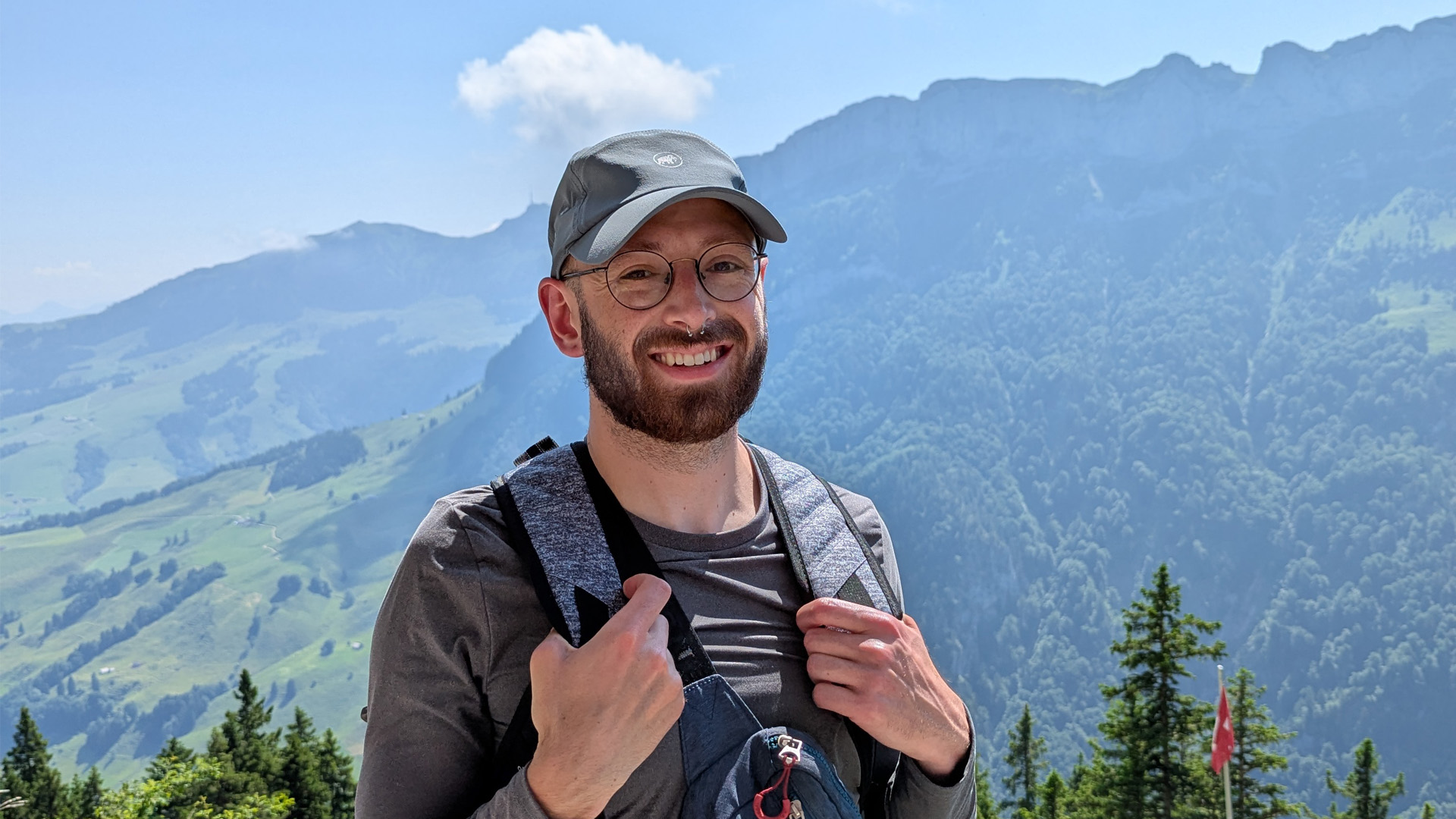
While his name may clearly say he’s Italian, Ciletti’s mother’s heritage is German, and he learned that her family and the Schlegelmilch family were originally from neighboring towns in the part of Germany formerly known as Prussia.
“Our families first emigrated at around the same time,” Ciletti says. “As I was deep into all the readings, it was strange to imagine that the two families probably knew each other’s surnames. I suppose that only deepened my interest in the whole project.”
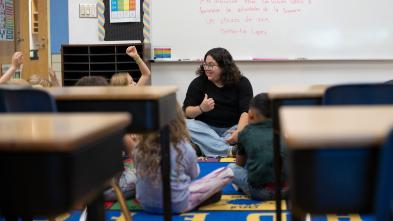
As a German teacher in middle and high schools in La Crosse, Ciletti says he does teach a little about the Kurrentschrift script and makes sure students have some familiarity of what it is if they see it.
“The crazy thing is that I’ve been keeping my own journals in Kurrentschrift for years now; my students find it funny and I’m sure someday my grandkids will go crazy trying to figure out what the heck they’re all about,” Ciletti chuckles.
Ciletti adds that he’s grateful for UW-Eau Claire faculty like Brown who allowed him to pursue a very niche interest, now a daily hobby that enriches his life.
“I never really thought about it this way until just now, but I think I owe the fact that I’m here now as a German teacher to how that research kept me going,” he says.
“When I was at a really low place, the work reminded me every day how much I love the language, and the project gave me a strong emotional reward that I was never expecting,” says Ciletti, now six years cancer free.