Leadership Academy for Medical and Health Innovation
The Leadership Academy for Medical and Health Innovation is a week-long, immersive experience designed for high school students eager to explore the future of healthcare, medicine, and biomedical discovery.
Participants can choose to attend either the July 26-31 session or the August 2-7 session. The cost to participate in the Academy is $2,200/participant.
The Leadership Academy for Medical and Health Innovation is a week-long, immersive experience designed for high school students eager to explore the future of healthcare, medicine, and biomedical discovery.
Participants can choose to attend either the July 26-31 session or the August 2-7 session. The cost to participate in the Academy is $2,200/participant.
Throughout the program, participants will learn alongside university faculty, clinicians, and innovators while choosing a Clinical Care or Biomedical Engineering track for the remainder of the camp. Both tracks are available during both camp sessions.
No matter which track you choose, inside the classroom and lab, you’ll engage in collaborative learning, build leadership skills, and gain meaningful exposure to the careers and technologies shaping the future of science and health.
Track Summary
Step into lifespan case studies and explore issues in human performance, health and wellness, and longevity. Realistic simulations and hands-on clinical skills practice — such as injury evaluation, casting and taping labs, radiograph interpretation, vital sign assessment, and cardiopulmonary testing — will develop your teamwork, communication, and problem-solving abilities grounded in Interprofessional Education Competencies for health professions.
Track Details
Throughout this fast‑paced, hands‑on week, you’ll explore two real-world case studies, designed to mirror real clinical encounters, through multiple health and wellness perspectives, including nursing, athletic training, and exercise physiology. The associated hands-on experiences will challenge you to think like a healthcare professional while sharpening your diagnostic reasoning, procedural competence, patient‑centered communication, and teamwork skills, preparing medical students to excel in the clinical environment. If you’re dreaming of becoming a doctor, this is your launchpad.
Case Study #1
In your first case study, you’ll evaluate a high-school basketball player who suffers an ankle injury during practice. Through interactive sessions, you’ll learn to take and interpret vital signs, perform an orthopedic injury assessment, fit a patient with support devices including crutches and braces, and perform venipuncture with proper technique and safety.
You’ll also explore rehabilitation strategies, make evidence-based decisions about return-to-play readiness, gain practical skills in patient education, and have discussions on parental consent — an area where emerging physicians must balance legal requirements, ethical considerations, and effective communication with families. Once our athlete obtains clearance for return to play, you will observe, conduct, and even participate in exercise physiology laboratory assessments to evaluate physical performance. These include maximal oxygen uptake (VO2max), muscular strength, muscular power, body composition, and dynamic balance.
As her case evolves, you will dive into reproductive health, gain a foundational understanding of physiology, explore the stages of childbirth, evidence‑based practices that promote safe outcomes, and the teamwork required in obstetric care. Rounding out the experience, you will get to experience maternal recovery, newborn assessment, and the holistic support families need during this critical transition.
Case Study #2
In your second case study, you’ll work with a middle-aged woman who faints during a yoga class and sustains a wrist injury. In the associated sessions, you’ll explore how to assess and manage a distal radius fracture and uncover the bigger picture when a fainting episode leads to a surprising underlying diagnosis while learning a comprehensive head-to-toe assessment.
Through interactive sessions, you’ll gain hands-on experience in analyzing radiographs, wound care, EKG monitoring, and casting and splint techniques. You’ll also explore the process of obtaining key physiological measurements associated with weight management programming and exercise prescription through middle adulthood. This experience includes observing a resting metabolic rate assessment and dual energy x-ray absorptiometry (DEXA), as well as participating in various submaximal exercise tests. Altogether, these experiences play a key role in supporting healthy lifestyle changes.
Track Summary
Take on engineering challenges that mirror real-world medical innovation. Design assistive robotic devices, use SolidWorks and 3D printing to create medical prototypes, develop anatomical models from CT data, explore biomaterials for bone repair, and engineer controlled drug delivery systems. Each activity encourages creativity, iteration, and leadership in solving complex healthcare problems.
Track Details
Dive into the future of healthcare with hands-on experiences that blend science, technology, and creativity. From designing robotic exoskeletons to 3D-printing patient-specific hearts, you’ll tackle real-world challenges that change lives. Explore drug delivery systems, lung physiology, and cutting-edge biomaterials — all while building skills that put you at the forefront of medical innovation.
Track sessions include:
Heart in 3D: From Scan to Reality
Step into the future of medicine! In this hands-on activity, you’ll take a real CT scan of a human heart — complete with its left atrial appendage — and transform it into a tangible 3D model. Learn cutting-edge segmentation techniques used by medical professionals, then bring anatomy to life with state-of-the-art 3D printing. This isn’t just science — it’s art, technology, and innovation combined. By the end, you’ll hold in your hands what surgeons see before life-saving procedures. Ready to turn pixels into precision? Let’s make hearts beat in 3D!
Power Up: Engineering Human Motion with Robotics
Imagine giving someone the ability to move their arm when they couldn’t before — that’s the challenge you’ll tackle! In this cutting-edge workshop, you’ll dive into assistive robotics engineering to design and build an exoskeleton device that restores movement. Explore biomechanics, sensors, and control systems as you turn raw ideas into life-changing technology. This is innovation with impact — where engineering meets empathy. Ready to create the future of human mobility? Let’s build something that moves the world!
Design a Drug Delivery System: Engineering Relief
Step into the shoes of a pharmaceutical engineer and tackle one of medicine’s biggest challenges: controlled drug delivery. You’ll design and prototype a system that keeps medication at the perfect level for the perfect time. Using biopolymer models, you’ll test, tweak, and compete to see whose design performs best. This is science in action — where chemistry, biology, and engineering collide to change lives.
Lung Physiology: Breathing Life into Science
Your lungs cycle half a billion times in a lifetime — how do they do it? In this hands-on activity, you’ll explore the mechanics of breathing, pressure-volume relationships, and hysteresis loops. Then, dive into experiments that reveal what happens during conditions like pneumothorax or the effects of smoking. This is physiology brought to life — because understanding breath means understanding life itself.
Shape Memory Biomaterials: Healing Bone with Smart Science
Bones don’t always break cleanly — and fixing them isn’t easy. In this activity, you’ll work with cutting-edge biomaterials like injectable bone putties and shape-memory polymer scaffolds to repair irregular defects. Discover how science and engineering create materials that adapt and heal. This is the future of regenerative medicine — where smart materials meet human resilience.
Medical Device Design: From Idea to Innovation
Step into the world of medical design! You’ll brainstorm, model, and refine a real-world biomedical device using SolidWorks and rapid 3D printing. Whether it’s a surgical tool or prosthetic component, you’ll learn how engineers turn ideas into life-changing solutions through creativity and precision. By the end, you’ll hold your own functional prototype — a glimpse into the future of healthcare innovation.
Housing and Meals
Participants will stay overnight in one of the residence halls on the UW-Eau Claire Campus. The residence hall will be safe and comfortable with modern amenities, including A/C.
Three meals a day and snack options are included in the program cost for all participants.
Special Dietary Needs
If you require any special dietary needs, please indicate this in your UWEC Camp Health Profile. The Program Director will work directly with Dining Services to ensure they are properly notified and prepared. It is the responsibility of the participant to ensure that all dietary needs are met, and Academy staff will work to ensure that we communicate these needs with Dining Services.
Experience an Eau Claire Summer
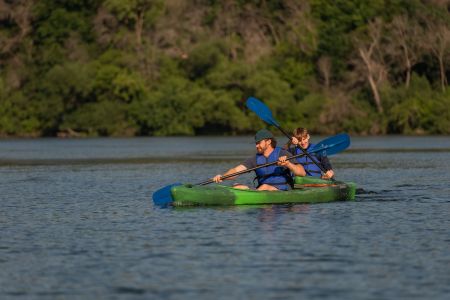
When you aren't in the classroom, you’ll have opportunities to build new friendships while experiencing all the best a Wisconsin summer has to offer. With activities like kayaking on Half Moon Lake, listening to music in Owen Park, conquering the ropes course, making s’mores around the bonfire, and stargazing with new friends, there is something for everyone.
The Leadership Academy provides ground transportation to and from the Minneapolis International Airport (MSP) and the Chippewa Valley Regional Airport for registered students. One bus will leave the Minneapolis airport in the afternoon on the first day of the program and will leave the University in the mid-morning on the final day of the program.
We will also arrange transportation for students from the Chippewa Valley Regional Airport to campus on the first and last day of camp. If your student needs this optional transportation, please indicate so on the Camp Health Profile. Academy staff will reach out at a later date to collect flight information and coordinate pick-up and drop-off locations.
Participants will be led by Academy staff to all activities during the program. Ground transportation will be provided to and from any sanctioned field trips that require it. If you have accommodation for transportation during Academy Activities, please indicate this on the UWEC Camp Health Profile. You should also reach out to the Program Director directly by emailing housng57@uwec.edu with any questions and concerns regarding transportation needs.
To ensure a safe and collaborative space for all, family members and non-academy participants are not permitted to participate in any portion of the Academy program. Occasionally, family members will plan their own trip to Eau Claire around the dates to experience the vibrant and exciting city of Eau Claire while their students participate in the Academy. Click here for more information!
For every 10 participants, there will be one assigned Academy staff member. Each student will have a dedicated chaperone as well as other staff members who will be available 24/7 throughout the program. If any student has a problem or concern, we’re always there to help and offer support.
The following policies are meant to ensure personal and collective safety during the UW-Eau Claire Leadership Academy for Medical and Health Innovation. Your commitment to honoring these policies will ensure a safe an enjoyable experience for all. It is each participant’s individual responsibility to follow and model these policies, and the collective responsibility of every participant, volunteer, Academy staff member, and Program Director to ensure that others are accountable to these policies.
General Policies:
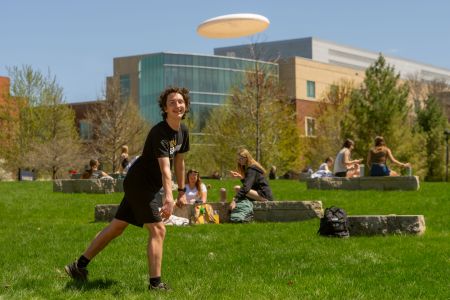
Groups of Three: While most of the Academy experience will involve group activities (coursework, lectures, simulations, guest speakers, evening activities, etc.), there will be brief segments where you will have a bit more freedom with your time. Whether you want to throw a frisbee, play sand volleyball, enjoy lawn games, or simply take a leisurely stroll through campus, be sure you do so with a few friends from your group. We recommend that you take at least two buddies with you wherever you go. Academy staff will note sanctioned free time
activities to help you determine which activities are right for you. You must notify an Academy staff member of where you are at all times and be sure you are accompanied by a group that includes an Academy staff member.
Conduct and Behavior: To create a safe and supportive environment where everyone can thrive, all our activities are geared toward building trust and encouraging creativity. We encourage Academy participants to express themselves however they are most comfortable within the bounds of conduct and behavior that reinforces our program’s respectful, welcoming, and inclusive environment. Violence, bullying, harassment, or abuse of any kind will not be tolerated. Participants must immediately notify Academy staff in the event of an emergency, including a medical emergency, fire, tornado, or active shooter and all participants must follow directions given by Academy staff at all times.
Accommodations: Be certain that you are employing respectful behavior within the residence hall at all times. This means staying in your assigned dorm room and honoring the Academy’s quiet hours and “lights out” expectations. Please note that your room is private to you and your roommate. Participants, instructors, staff members, and volunteers should not enter your room except in times of emergency.
Once our evening activities have ended, we will all return to the residence hall to prepare for bed. At “lights out”, everyone will return to their dorm rooms, where they will stay (minus bathroom visits, of course), until the following morning. Please note that you will be financially responsible for any damage done to your dorm room. If you notice any damage upon check-in, please notify a staff member.
No Outside Guests: To ensure a safe and collaborative space for all, family members and non-academy participants are not permitted to participate in any portion of the Academy program. Please note that your room is private to you and your roommate. Participants, instructors, staff members, and volunteers should not enter your room except in times of emergency.
What not to bring: The following items are not permitted: weapons, illegal substances (including drugs/alcohol), tobacco, vaping devices, or any item that might prove harmful to the safety of our participants and staff.
Off-campus activities: No student is permitted to leave the designated areas for sanctioned Academy activities without permission from the Academy Program Director. On a few occasions, we may venture into the city of Eau Claire for some off-campus academic and non-academic activities. During these sanctioned field trips, participants represent the Leadership Academy and must follow the Code of Conduct. Participants will always be
under the supervision of an Academy staff member in a 1:10 ratio and must remain with their assigned group to ensure safety.
Medication: All prescription medication must be in the original medicine bottle and labeled with the youth participant’s name, doctor’s name, medication name, dosage, prescription number, date prescribed, and instructions. Over-the-counter medications may be brought to the event/camp, if needed, and may be administered by camp health staff as needed. All over-the-counter medications must be in the original manufacturer’s packaging and labeled with the youth participant’s name, medication name, dosage, and instruction. At check-in, 14–17-year-old participants with medication will give their medication to Academy staff to be kept in a locked unit until medication is needed with the exception of any medication or device used in the event of life-threatening situations (bee sting medication, inhalers, an insulin syringe, etc.), which may be carried by a camper or staff member. You must also complete the medication information and health history form in the UWEC CampDoc Health
Profile.
Substances: UWEC’s medical policies require participants to inform the Academy Program Director if participants have prescription medication with them on campus. Registration information should also note prescription medication, and should accurately reflect what a participant is bringing to campus. Any substances found on campus without a prescription and prior notification may result in the participant's removal from the Academy.
General Safety: Ensuring the physical, mental, and emotional safety of our participants and staff is of the utmost importance to both the Academy and to UWEC. Adhering to these policies is the best way to create a safe experience for all.
Failure to abide by the policies set forth in this code of conduct may result in disciplinary action including potential expulsion from the program.