
ID

Writing with fire: English, honors and Bree Muske
Story Categories
Authored on
Writing with fire: English, honors and Bree Muske
Published on:
Intro text
Bree Muske entered the University of Wisconsin-Eau Claire with a passion for English studies and a fire for personal growth. Through her work in the Center for Writing Excellence and the Mark Stephen Cosby Honors College, she discovered her voice, built lasting connections and shaped a future of creative routes from purposeful roots.
Sections

Bree Muskee, UW-Eau Claire Class of 2026

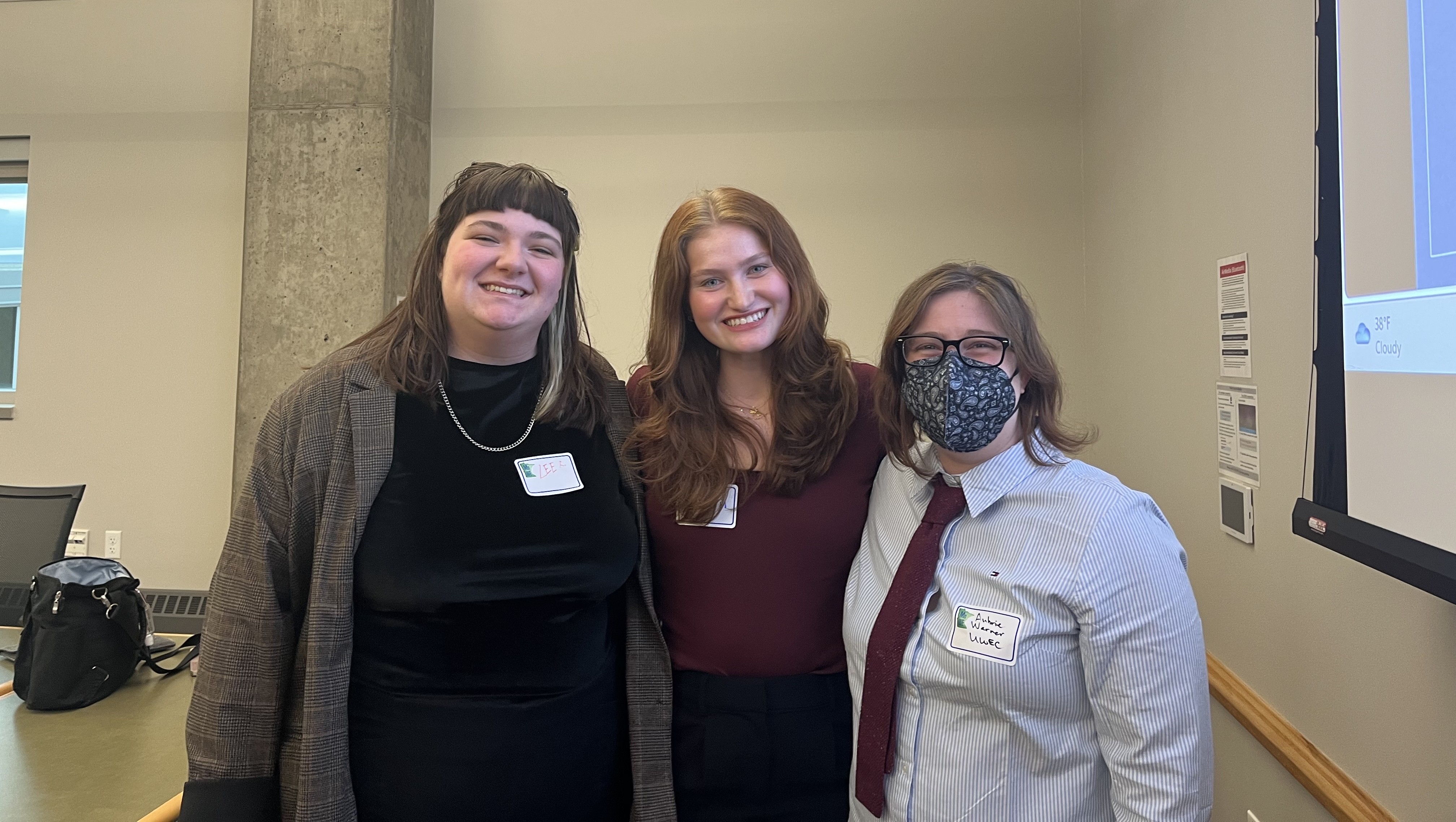
Muske (left) presents a trifold about the CWE with a fellow writing center student.

Muske presents in person and over Zoom on the work of the UW-Eau Claire Center for Writing Excellence at the MnWE: Minnesota Writing and English Conference in River Falls.
For the media
For the media
Image download
You may also like

UW-Eau Claire senior Rachel Stein, who will graduate in December, has used biomedical research, study abroad terms in Spain and coursework in the Mark Stephen Cosby Honors College to find her post-graduation path.

Cate Quarders is one of 25 recipients of the 2026 Pedro Zamora Young Leaders Scholarship after bringing reproductive health resources to UW-Eau Claire – Barron County.
The nationally recognized Goldwater Scholar and All-American gymnast chose to carve out time from her busy schedule to fly to Kansas City, Missouri, and donate peripheral blood stem cells for a cancer patient on Sept. 1.