Social Work
UW-Eau Claire’s accredited social work program combines high educational standards and teaching expertise with your desire to solve problems, advocate for others, and improve the lives of individuals, families, groups, and societies.
A Bachelor of Social Work (BSW) degree can lead to careers in healthcare, schools, criminal justice, nonprofit leadership, public policy, government, and corporate settings.
Choose a path where your work has purpose, your skills are in demand, and every day brings the opportunity to make a meaningful impact.
Pursue a Meaningful, Purpose-Driven Career
Through hands-on learning, expert faculty mentorship, and real-world internship experience, you will develop the practical, in-demand skills that employers will value. The comprehensive curriculum includes coursework focused on interpersonal skills, human rights, research, policies, and social work practice with individuals, families/groups, and communities/organizations.
A variety of electives are also available, allowing you to tailor your education to align with your professional interests. Explore elective coursework in areas such as aging, self-care, counseling skills, understanding trauma, mental health and substance use. All social work courses are taught by faculty with practical experience as social workers, ensuring your coursework is directly relevant to the profession.
Prior to graduating, you will complete an internship, working closely with site partners throughout the community and in an area that aligns with your professional interests. Many social work students also choose to take their education a step further by studying abroad, joining a cultural immersion program, or participating in the National Student Exchange program. These opportunities open doors to new experiences and deeper cultural awareness.
Program Details
Accreditation Information
Since 1974, the UW-Eau Claire Department of Social Work has been accredited by the Council on Social Work Education. This means that our program meets strict standards, ensuring curriculum and qualified faculty provide quality social work education and prepares you for ethical, competent practice.

Licensure Information
Professional licensure requirements vary from state to state and can change year to year; they are established in a variety of state statutes, regulations, rules, and policies; and they center on a range of requirements. More details about the licensing and certification requirements can be found on the Association of Social Work Boards (ASWB) website.
The requirements of this program meet licensure in the following states or territories:
Alabama, Alaska, Arizona, Arkansas, Delaware, District of Columbia, Guam, Hawaii, Idaho, Indiana, Iowa, Kansas, Kentucky, Louisiana, Maine, Maryland, Massachusetts, Minnesota, Mississippi, Nebraska, Nevada, New Hampshire, New Jersey, North Carolina, North Dakota, Northern Mariana Islands, Ohio, Oklahoma, Oregon, South Carolina, South Dakota, Tennessee, Texas, U.S. Virgin Islands, Utah, Virginia, West Virginia, Wisconsin
The requirements of this program do not meet licensure in the following states or territories because an MSW degree is required:
California, Colorado, Connecticut, Florida, Georgia, New York, Rhode Island, Washington, Vermont
The requirements of this program do not meet licensure in the following states because they have additional requirements beyond the BSW:
Illinois, Michigan, Missouri, New Mexico, Pennsylvania, Montana, Wyoming, and Puerto Rico
These territories do not currently license social workers:
American Samoa, Federated States of Micronesia, Republic of Palau

Social workers are needed now more than ever, with projected growth faster than average. The social work profession offers stability and growth potential. Social work careers paths span across a variety of settings such as healthcare, schools, nonprofit, government, and corporate settings.
A BSW from UW–Eau Claire opens the door to a wide range of in-demand careers where you can make an immediate impact with lasting career opportunities.

After declaring social work as a major, you will be assigned two dedicated advisors: a social work faculty member and an ARCC academic advisor who specializes in your degree plan.
Your academic journey is not a one-size-fits-all. The dual advising approach is designed to support your success, providing personalized, holistic guidance tailored to your goals and interests.

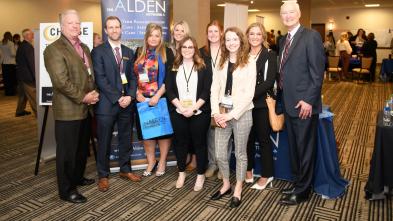
Each fall and spring, you will have the opportunity to attend the Social Work Professional Development Day. This signature event is hosted by the social work department and designed specifically for BSW students and community partners.
This event provides you with the opportunity to network and build connections with social work professionals and explore career paths. You will also participate in themed sessions tailored to the social work profession, giving you real-world perspectives that extend beyond the classroom.
Blugold Stories


I didn't even know what research really was. I've done research papers where I would look up articles and then read them and implement them into my writing. But I never thought that I would actually be going out into the field, analyzing and taking notes on human behavior.

JustThe Facts

Where can the social work program lead me after graduation?
Graduates of our social work program leave prepared and ready to make a difference. Because of the broad nature of the program, you will be qualified to work in a variety of fields, including mental health, alcohol or drug abuse, gerontology, and child welfare.
Example Careers
- Adoption specialist
- Probation officer
- Marriage and family therapist
- Substance abuse counselor
- Academic advisor
- Guidance counselor
- Gerontologist
- Victim crisis manager
- Behavior therapist
UWEC Graduates
Graduates of this program have gone into careers at the following places:
School Social Worker
Wisconsin
Director of Human Services
Colorado
Youth Advocate
Minnesota
Work Readiness Specialist
Wisconsin
Veteran Affairs Mental Health Social Worker
Minnesota
Aging and Disability Resource Center Executive Director
Wisconsin
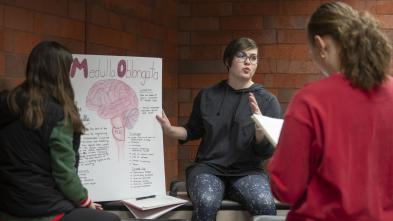
Taught by supportive, knowledgeable professors, coursework in our social work degree program will help you explore and understand the many facets of social work. All social work majors also have access to lab spaces and related facilities, where you can practice engaging and intervening with individuals, families, and groups, and receive constructive feedback.
Here are a few courses in Social Work at UW-Eau Claire.
SW 383
Social Welfare Policies and Programs
Structure and content of social welfare policies; models of policy analysis; policy development; ethics. Emphasis on oppression, discrimination, and the social values of adequacy, equity, and social and economic justice, especially for oppressed and at-risk populations.
SW 335
Human Behavior and the Social Environment
Interactions between persons and their social environments. Impact of functioning of communities, groups, families, and individuals on each other. Emphasis on dynamics of discrimination and oppression, and effects of race and racism, poverty, gender, sexual orientation.
SW 471
Generalist Social Work Practice with Families/Groups
Knowledge, skills, values, and ethics related to social work practice with diverse, oppressed, and at-risk families and treatment groups. Applied laboratory dimension focuses on professional communication and assessment skills with families and groups.
Get More Info
Sign up to receive additional information about our campus.
Meet the Faculty




What's Next?